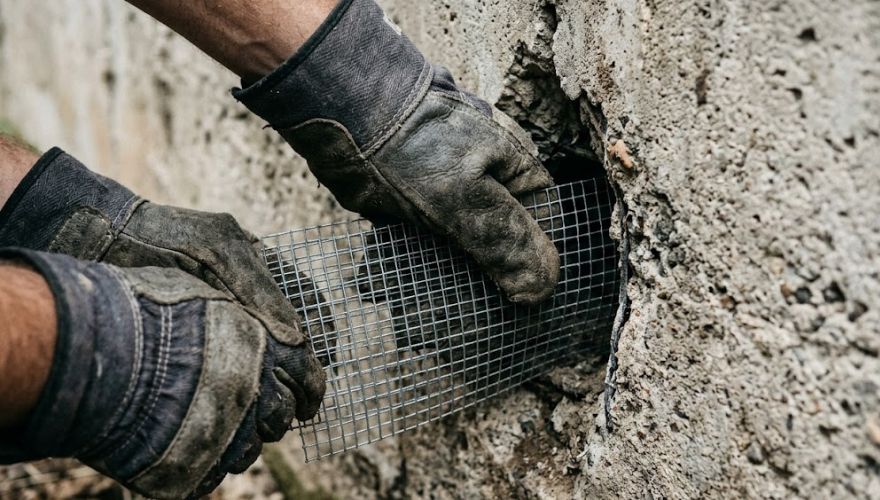
 Why exclusion is non-negotiable
Removal Without Exclusion Is Temporary
Rodent exclusion is the sealing of all structural gaps through which rats and mice can enter a property. In Huntsville's year-round climate, surrounding rodent populations are continuously active -- new animals pressure any property with open entry points within weeks of a completed removal. Without sealing, the cycle repeats reliably.
The challenge is that effective exclusion requires finding every significant gap. A typical Huntsville home has 15-40 potential entry points across the roofline, foundation, garage perimeter, utility penetrations, and door seals. Sealing five while leaving twelve open produces no durable result -- rodents find the unsealed pathways, often faster than they found the original entry.
Exclusion Methods by Entry Type
Roofline gaps
Stainless steel mesh at open soffits, caulk at fascia-to-roofing junctions, hardware cloth at plumbing stacks and attic ventilation.
Foundation and crawl space
Hardware cloth at crawl space vents, concrete mortar at foundation-level gaps, steel wool with caulk backing at pipe penetrations.
Utility penetrations
Expanding foam with mesh backing at HVAC, plumbing, gas, and electrical penetrations through exterior walls and foundation.
Door gaps
Door sweep installation on exterior, garage, and utility room doors. Threshold replacement where door-to-floor gaps exceed a quarter inch.
Weep holes
Copper mesh insert into brick weep holes -- maintains drainage function while blocking mouse-sized entry.
Garage doors
Weather stripping replacement at door sides and top; bottom seal replacement where worn stripping creates corner gaps.
Exclusion for Huntsville Construction Eras
Exclusion materials and methods vary significantly by construction era. Pre-1940s pier-and-beam homes in Twickenham require different approaches than 1980s brick ranches or 2015 slab-foundation builds. Heritage-sensitive materials are used on historic-district properties where visible exterior modifications may affect architectural character. We document all entry points identified and present the full list before beginning any sealing work -- you choose whether to address all at once or phase the exclusion scope based on budget.
Frequently Asked Questions
Can I get exclusion without a full removal service?
Yes. If removal has already been handled or evidence suggests the active infestation has cleared, we perform standalone exclusion inspection and sealing. We confirm during inspection whether removal is still needed before beginning exclusion.
How long does exclusion work take?
Minor exclusion -- sealing 3-8 entry points on a standard residential property -- can typically be completed in 1-3 hours. Full exclusion on a larger or older Huntsville property may require a dedicated visit of 3-6 hours. We quote time and scope before beginning.
Do exclusion materials damage the home's exterior?
We match materials to the surface and location. On historic or brick properties, we use copper mesh, mortar, and caulk that don't damage original materials. We don't drill through brick or disturb historic fabric without discussing it with you first.
How do I know if my exclusion is complete?
We document all entry points found during inspection and confirm which were sealed before closing out the job. If we find additional gaps during the sealing process, we document and quote those separately before proceeding.
Does exclusion prevent all future rodent entry?
Exclusion seals the gaps present at the time of service. New gaps can develop over time from settling, weather damage, or renovation work. We recommend an annual perimeter check on older Huntsville properties to catch new entry points before they are used.