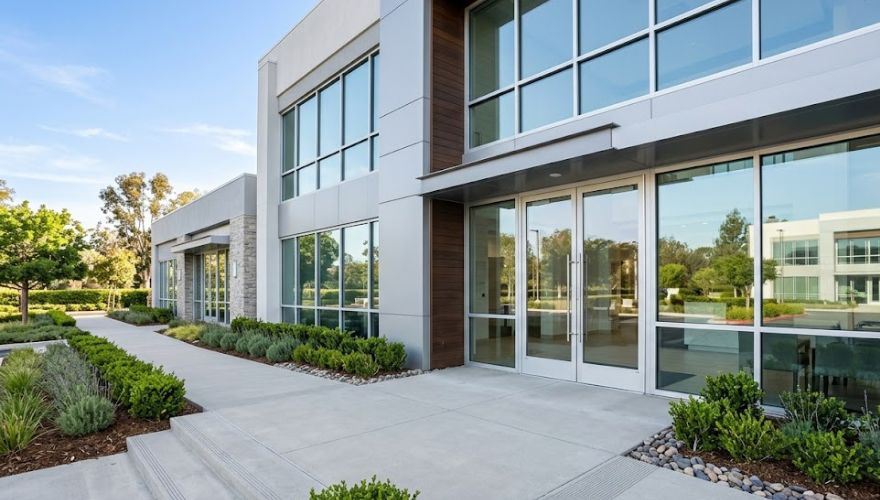
Cummings Research Park is the second-largest research park in the United States by acreage, anchoring Huntsville's identity as a technology and defense hub. The 300-plus companies operating within it -- defense contractors, aerospace firms, engineering consultancies, and technology companies -- represent a commercial property category with rodent control requirements that differ from standard commercial programs in ways that matter for effective, compliant service.
The Norway Rat Corridor Beneath Research Park
Cummings Research Park's landscape infrastructure -- the drainage berms, retention features, bioswales, and storm water management systems built into the park's development -- sustains established Norway rat populations in the perimeter zones between facilities. The I-565 corridor that borders the park's southern edge runs through territory with drainage infrastructure that connects to established Norway rat habitat in the Tennessee River watershed.
Norway rats from this perimeter infrastructure pressure facility foundations year-round. The pressure is consistent rather than seasonal because Huntsville's subtropical climate eliminates the winter population suppression that northern climates provide. A facility that eliminates interior Norway rat activity in October will see exterior pressure begin testing its perimeter again by November if the exterior bait station program isn't maintained.
Loading dock areas and facilities adjacent to the park's landscape buffer zones see the highest pressure concentrations. Norway rats from the landscape buffer travel toward the building perimeter at night, investigating loading dock gaps, foundation-level utility penetrations, and dumpster enclosure perimeters for entry opportunities.
House Mouse Pressure Through Utility Penetrations
House mouse activity in Research Park facilities is primarily an interior management problem rather than a perimeter one. The entry pathway is typically through utility penetrations at slab level -- HVAC refrigerant lines, plumbing supply and drain penetrations, and electrical conduit entries that were not sealed at original construction or were inadequately sealed during subsequent facility buildouts.
Mice entering through slab-level penetrations establish colonies in wall voids adjacent to mechanical equipment -- server rooms (where the HVAC equipment provides heat), mechanical spaces, and break room kitchen areas where food is available. The pattern is consistent across Research Park facilities: mice appear in mechanical areas first, spread to break rooms, and eventually appear in office spaces as the colony expands outward from the initial entry points.
The solution -- sealing all significant utility penetrations at slab level -- is straightforward but requires systematic identification of every unsealed penetration. In larger Research Park facilities with multiple rounds of construction and buildout, unsealed penetrations from prior buildout phases are common and often invisible without deliberate inspection.
Documentation Requirements for Research Park Facilities
Research Park facilities operating under government contracts, quality management certifications (ISO 9001, AS9100, CMMI), or regulated industry standards often have pest management documentation requirements that exceed what a standard commercial invoice provides. Inspectors auditing these facilities against their quality management systems want to see:
- Licensed provider credentials and current license status
- Written service records showing inspection findings, treatment applied, and station activity data
- Site maps showing exterior station placement locations
- Documentation of any conditions observed that require facility correction
- A clear service schedule showing monitoring frequency and next scheduled visit
We structure service records to align with whatever documentation format your quality management system requires. If your facility is subject to a specific audit standard, discuss the format requirement with us during the initial consultation and we'll confirm whether we can match it.
Method Restrictions in Sensitive Facility Environments
Research Park facilities with sensitive electronics, optics, clean room adjacency, or materials testing environments have method restrictions that standard commercial treatment programs don't account for:
- No aerosolized products in or adjacent to sensitive electronics, clean rooms, or optics environments. Aerosolized treatment products can contaminate sensitive surfaces and interfere with precision equipment.
- Snap traps rather than bait stations in interior zones where secondary poisoning risk or regulatory restrictions on rodenticide use apply. Some Research Park facilities under specific federal contracts have rodenticide restrictions that don't apply to commercial properties generally.
- Placement coordination with facilities management before any equipment is installed -- particularly in environments where equipment placement requires clearance from the site safety or facilities team.
We review treatment method selection with your facilities team before any product or equipment is introduced into the building. Nothing is applied without your team's knowledge and approval of the specific approach.
Access coordination for Research Park facilities
Many Research Park facilities require advance visitor registration, badge issuance, or escort arrangements before any outside service provider can access the property. We coordinate all access requirements in advance during the initial scheduling call -- confirming badging timelines, escort needs, and any after-hours access restrictions before the appointment date. We don't show up unannounced or expect facility staff to manage access at the last minute.
Monitoring Frequency for Research Park Properties
The appropriate monitoring frequency for a Research Park facility depends on the facility's pressure level:
- Facilities adjacent to park landscape buffers or retention features: Monthly exterior monitoring minimum. These properties face the highest Norway rat perimeter pressure and will see infestation re-establish faster than those in lower-pressure zones if monitoring lapses.
- Facilities in lower-pressure interior park zones, away from drainage features: Monthly monitoring still recommended for most, with quarterly as the minimum for facilities with the lowest rodent risk history and no food service operations.
- Facilities with on-site food service (cafeteria, break room kitchen): Monthly monitoring regardless of zone, given that food availability creates sustained interior pressure that requires regular station servicing to detect early.
We assess the appropriate frequency during the initial facility inspection and include the recommendation in the written proposal. We don't recommend higher-frequency monitoring than your facility's specific pressure level warrants -- and we don't recommend lower frequency than what's needed to catch repressure before it becomes an established interior infestation.
For Cummings Research Park facility managers, property owners, or operations teams interested in establishing or reviewing a rodent control program, call (844) 635-0403 to schedule a free facility inspection. We'll assess Norway rat perimeter pressure, identify utility penetration vulnerabilities for house mouse entry, and provide a written proposal with the program structure and pricing before any work begins.
Cummings Research Park Facility?
Free facility inspection with written proposal. Compliance documentation, access coordination, and sensitive-environment methods included.
📞 Call (844) 635-0403